
When our client filled out our custom jewellery quote form, he described the ring from two angles. From above, he wanted a square cushion diamond held by four small semi-claw tips. From the side, he wanted to see the diamond itself, with as much open space beneath it as possible. White gold was his choice for both the prongs and the band.
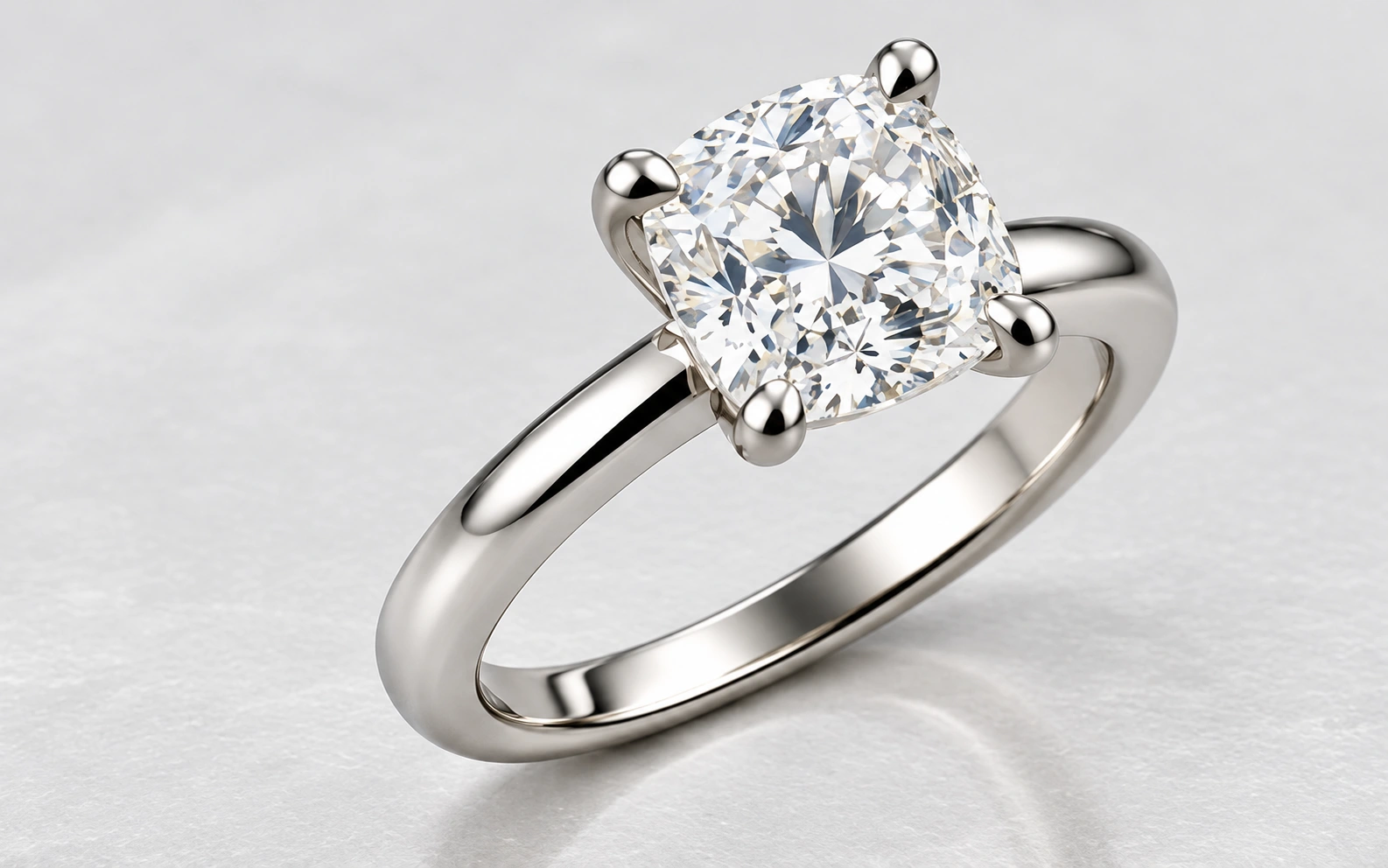
Putting the idea on paper
Our first CAD drawing gave us something specific to discuss. In the top view, each prong meets one corner of the cushion. Turn the design sideways and the four prongs rise from a single point on the band. For a US size 6 ring, the drawing called for a band 1.8 mm wide and 1.5 mm thick at its base.
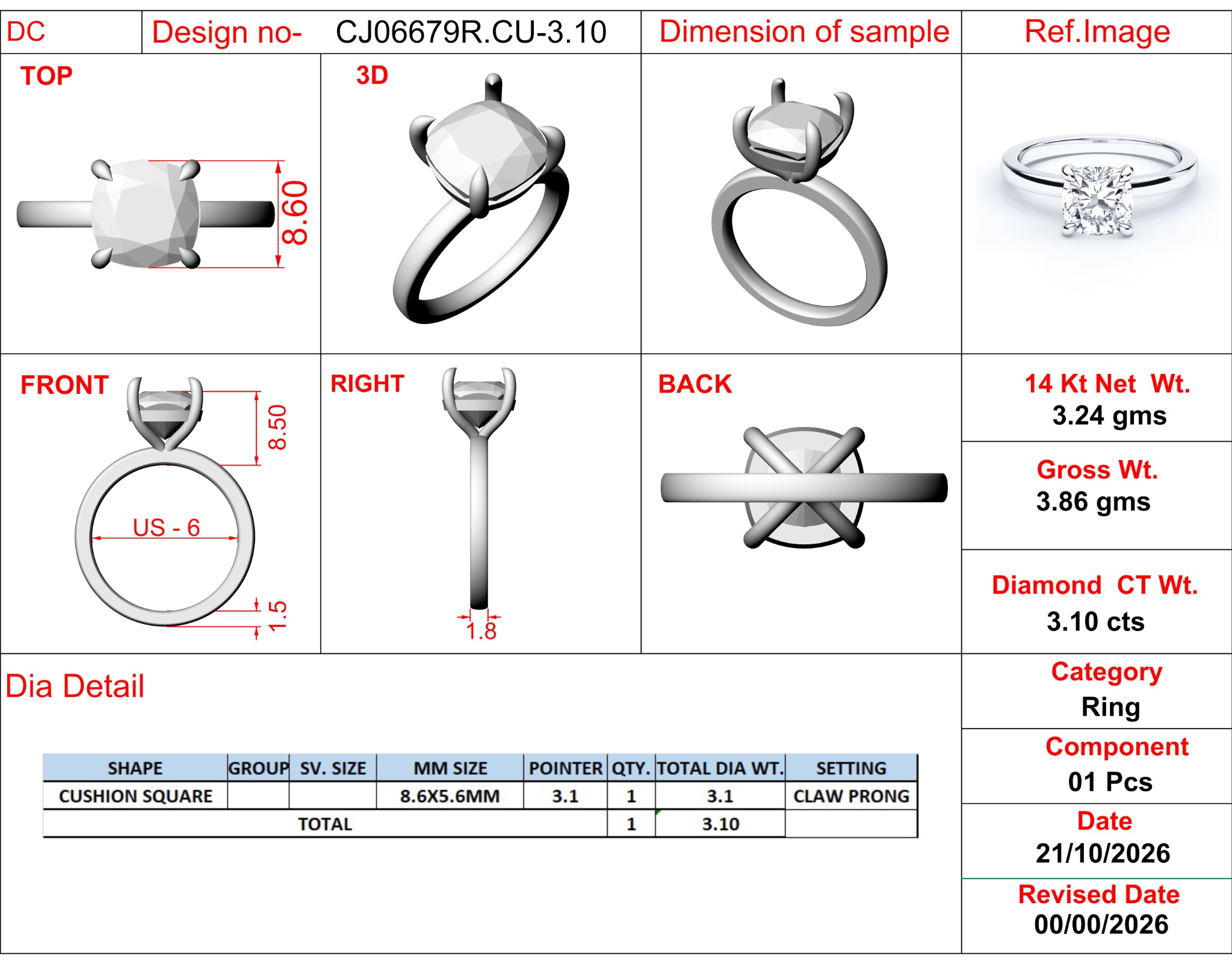
Refining the open profile
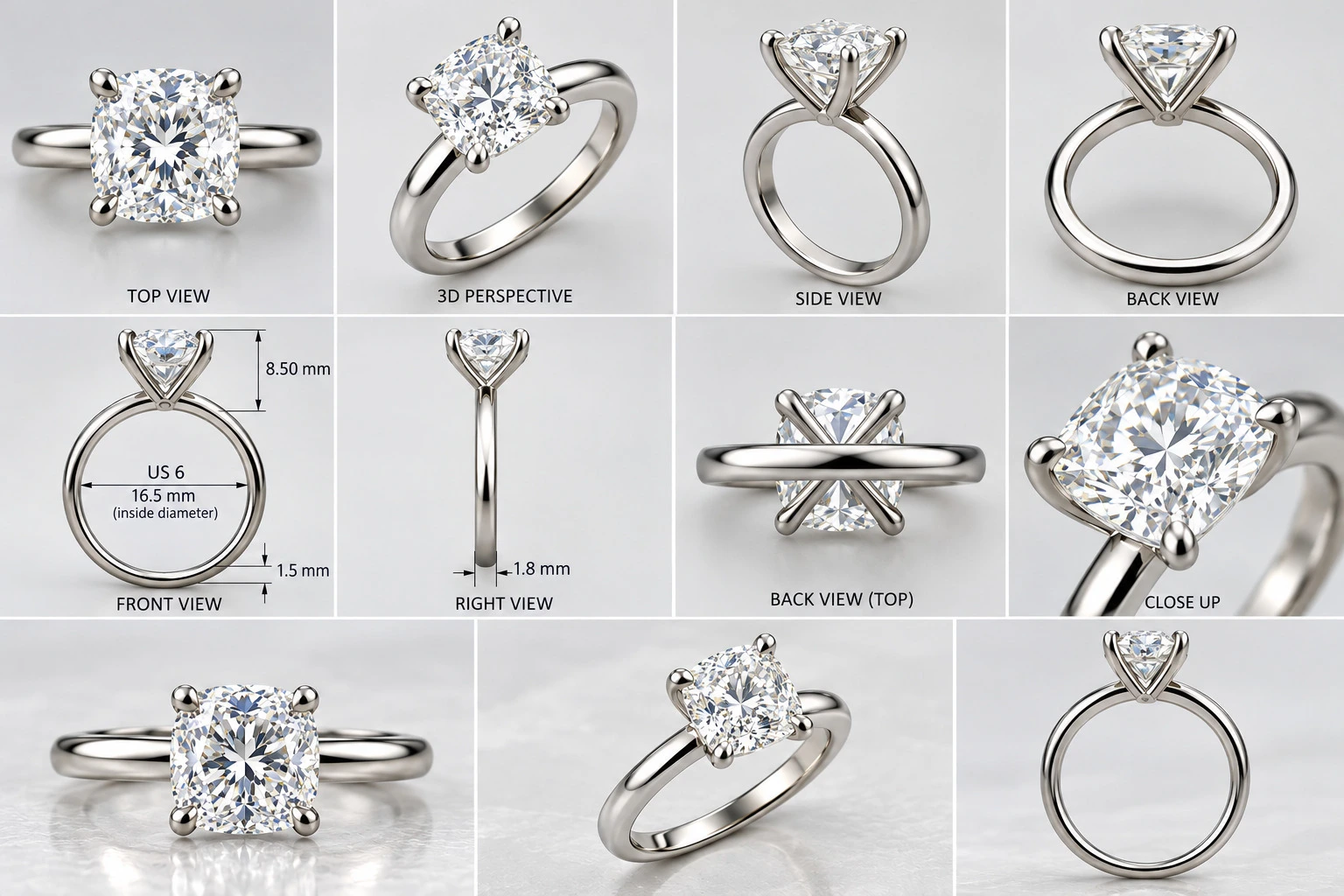
In our conversations, the client described wanting “no seat” under the diamond. His goal was to let in as much light as possible and see the stone sparkle as he turned it. The side view helped us translate that idea into metal. We left the space between the prongs open, with no horizontal rail crossing the side of the stone. Each prong still provides a point of support for the diamond.
After going back and forth, we settled on the design below. Look at the close-up to see the semi-claw tips, then at the back view to see how much of the stone’s V-shaped underside is visible.
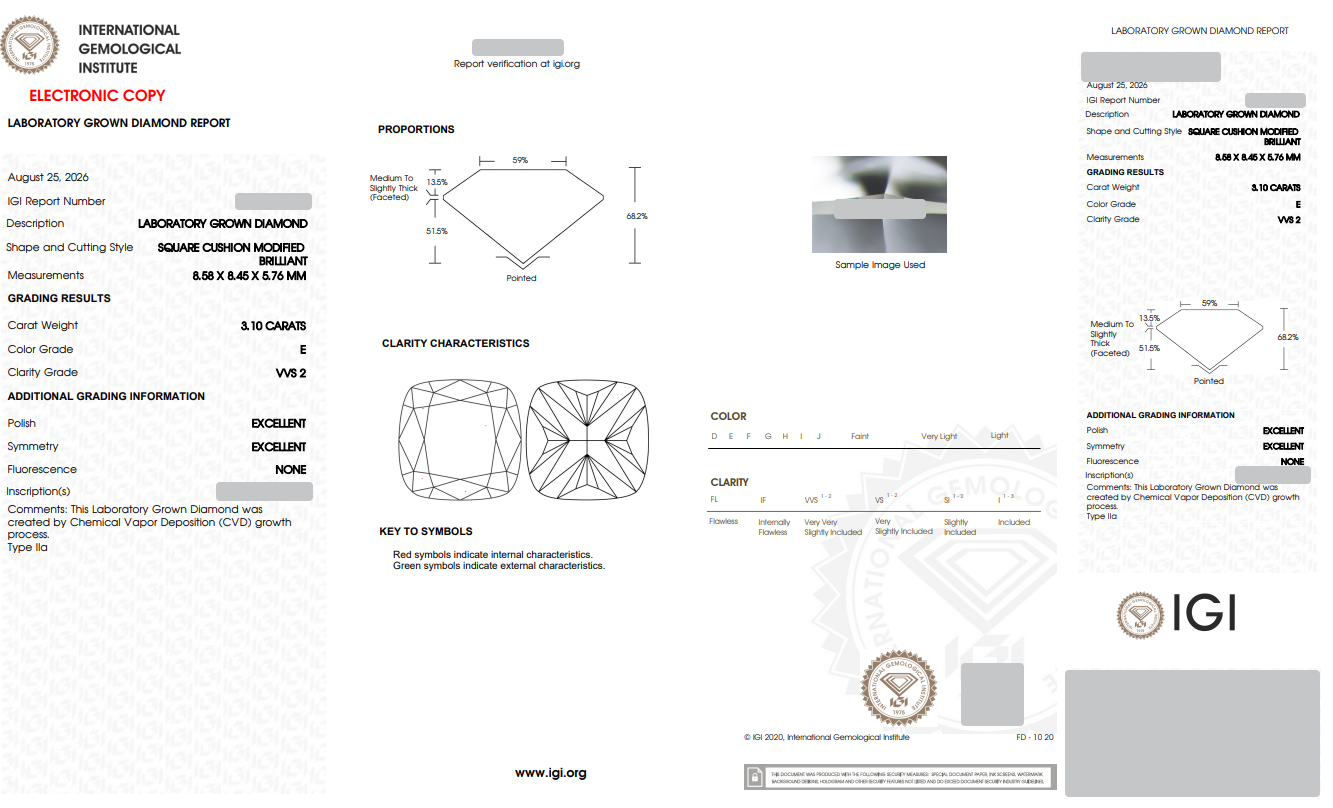
The 3.10 ct centre diamond
IGI describes the lab-grown diamond as a Square Cushion Modified Brilliant, graded E colour and VVS2 clarity. It measures 8.58 × 8.45 × 5.76 mm. The first two measurements differ by just 0.13 mm, giving the stone the near-square outline you can see between the four tips.
At the bench, before setting
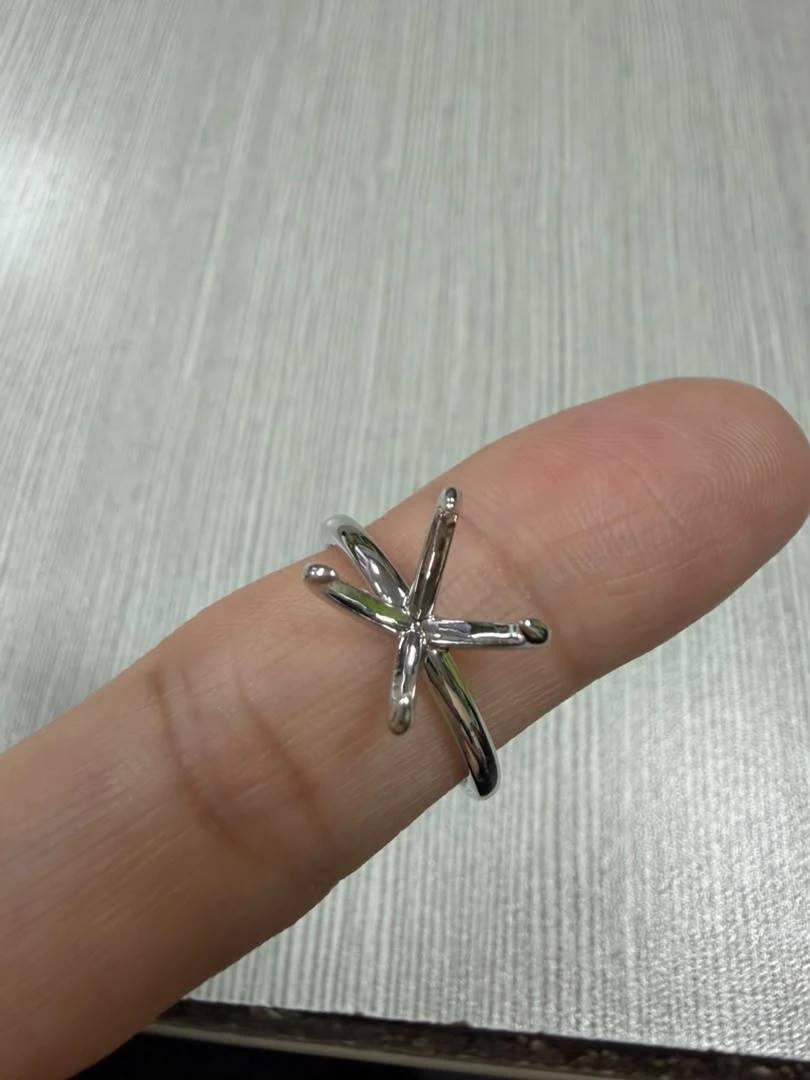
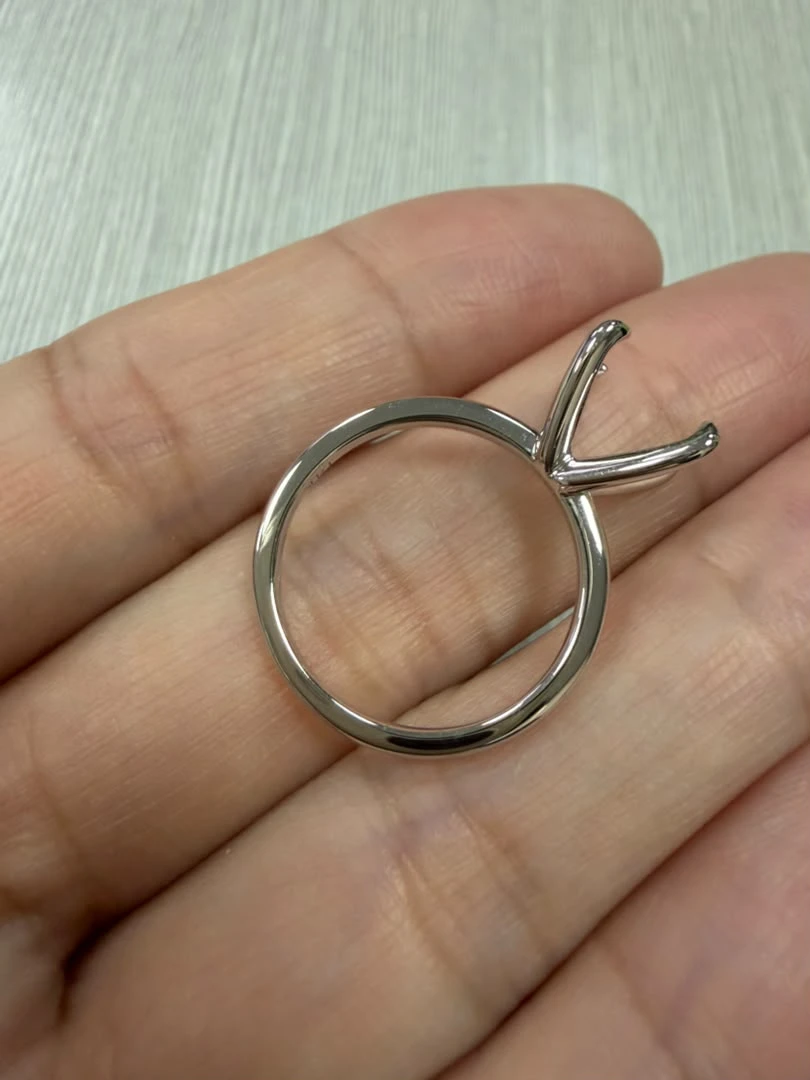
These workshop photos show a stage that disappears once the diamond is in place. From above, you can trace each of the four prongs back to the centre. From the side, you can see exactly where the head meets the white gold band.
Watch the finished ring
In the finished solitaire, the easiest detail to miss is the one our client cared about most. Watch the ring turn from face-up to profile. The four tips that frame the cushion give way to an open view beneath it, and the reflections shift across the facets as the angle changes.
Watch the 34-second film on YouTube
If you have a ring in mind, tell us what you want to see when you look down at your hand and when you turn it to the side. A sketch, a reference photo or a few lines in our custom jewellery quote form is enough to start the conversation.